General Contractor vs Subcontractor: What
Every Homeowner Needs to Know
• What a General Contractor Actually Does
• When You Actually Need a General Contractor
• What a Subcontractor Does
• The Accountability Chain That Actually Matters
• How GCs and Subcontractors Work Together
• Can You Hire Subcontractors Directly?
• What to Verify Before Hiring a GC
• How Homeplexi Simplifies This
• FAQs
When you hire someone to remodel your kitchen or replace your roof, you're stepping into a world with its own hierarchy. Two roles come up constantly: the general contractor and the subcontractor. Most homeowners use the terms interchangeably, but they mean very different things - and mixing them up can lead to budget surprises, accountability gaps, and headaches you didn't see coming.
Here's what each role actually does, how they work together, and what it means for your project and your wallet.
What a General Contractor Actually Does
A general contractor (GC) is the person or company you hire directly to manage a construction or renovation project from start to finish. They're your main point of contact - the one who holds the contract with you and takes responsibility for delivering the finished work.
Their job covers a lot of ground. A GC pulls permits, builds the project schedule, coordinates workers on site, orders materials, and makes sure everything meets local building codes. When something goes wrong, they're the ones you call.
General contractors carry their own license and insurance, and they're legally responsible for the project outcome. The majority of states require some type of state licensing program for general contractors, with common requirements including trade knowledge exams, proof of experience, and insurance verification. If a wall gets framed incorrectly or a subcontractor damages your flooring, your GC is accountable to you - not the individual worker who made the mistake.
When You Actually Need a General Contractor
You need a GC when a project involves multiple trades, significant structural work, or anything requiring permits. Full bathroom remodels, home additions, new builds, major kitchen renovations - these jobs require someone to orchestrate moving parts. Electricians, plumbers, tile setters, and carpenters all need to show up in the right order, and that coordination doesn't happen on its own.
For smaller, single-trade jobs, you can often hire a specialist directly and skip the GC layer entirely.
What a Subcontractor Does
A subcontractor is a specialist brought in to handle a specific scope of work within a larger project. They don't work for you directly - they work for the general contractor, who hired them to cover a particular trade.
Common subcontractors include electricians, plumbers, HVAC technicians, drywall installers, roofers, painters, and tile setters. Each one focuses on their specialty and typically moves on once their portion is done.
Subcontractors are usually licensed in their specific trade - an electrician holds an electrical license, a plumber holds a plumbing license. They carry their own insurance too, though your GC should verify that before anyone sets foot on your job site.
The Accountability Chain That Actually Matters
Here's the part that catches homeowners off guard: you have no direct contract with the subcontractors working on your project. Your contract is with the GC. So if a plumber does shoddy work, you go to your GC to resolve it - not the plumber.
That chain of accountability is a feature, not a flaw. A good GC vets their subs, manages their work, and stands behind the results. But it also means your choice of GC matters enormously, because their subcontractor relationships have a direct impact on your project quality.
How GCs and Subcontractors Work Together
Think of the GC as the project manager and the subs as the specialists. The GC bids the job, signs the contract with you, and then either uses their own crew for certain work or brings in subcontractors for the trades they don't self-perform.
When presenting your overall project cost, the GC marks up the subcontractors' bids. General contractors typically add 10-20% on top of subcontractor prices to cover coordination, warranty exposure, and overhead allocation. That markup covers their time coordinating the job, managing risk, and standing behind the finished work. It's a normal, legitimate part of how construction pricing works.
A typical project flow looks like this:
• You hire a GC and sign a contract
• The GC schedules subcontractors by trade, in the right sequence
• Each sub completes their portion and leaves the site
• The GC inspects and approves each phase before the next begins
• You communicate exclusively with the GC about progress, issues, and changes
Can You Hire Subcontractors Directly?
Yes - and sometimes it makes sense. If you need a single trade, like a licensed electrician to add a circuit or a plumber to replace a water heater, hiring that specialist directly cuts out the GC layer and the markup that comes with it.
On larger jobs, though, this approach carries real risk. Without a GC, you become the project manager. You're responsible for scheduling trades in the right order, making sure each phase is ready before the next one starts, and sorting out any disputes between workers. That's a significant time commitment, and sequencing mistakes can easily cost more than whatever markup you saved.
Most homeowners who try to act as their own GC on a multi-trade project find it far more demanding than they expected.
What to Verify Before Hiring a GC
Not all general contractors operate the same way. A few things worth checking before you sign anything:
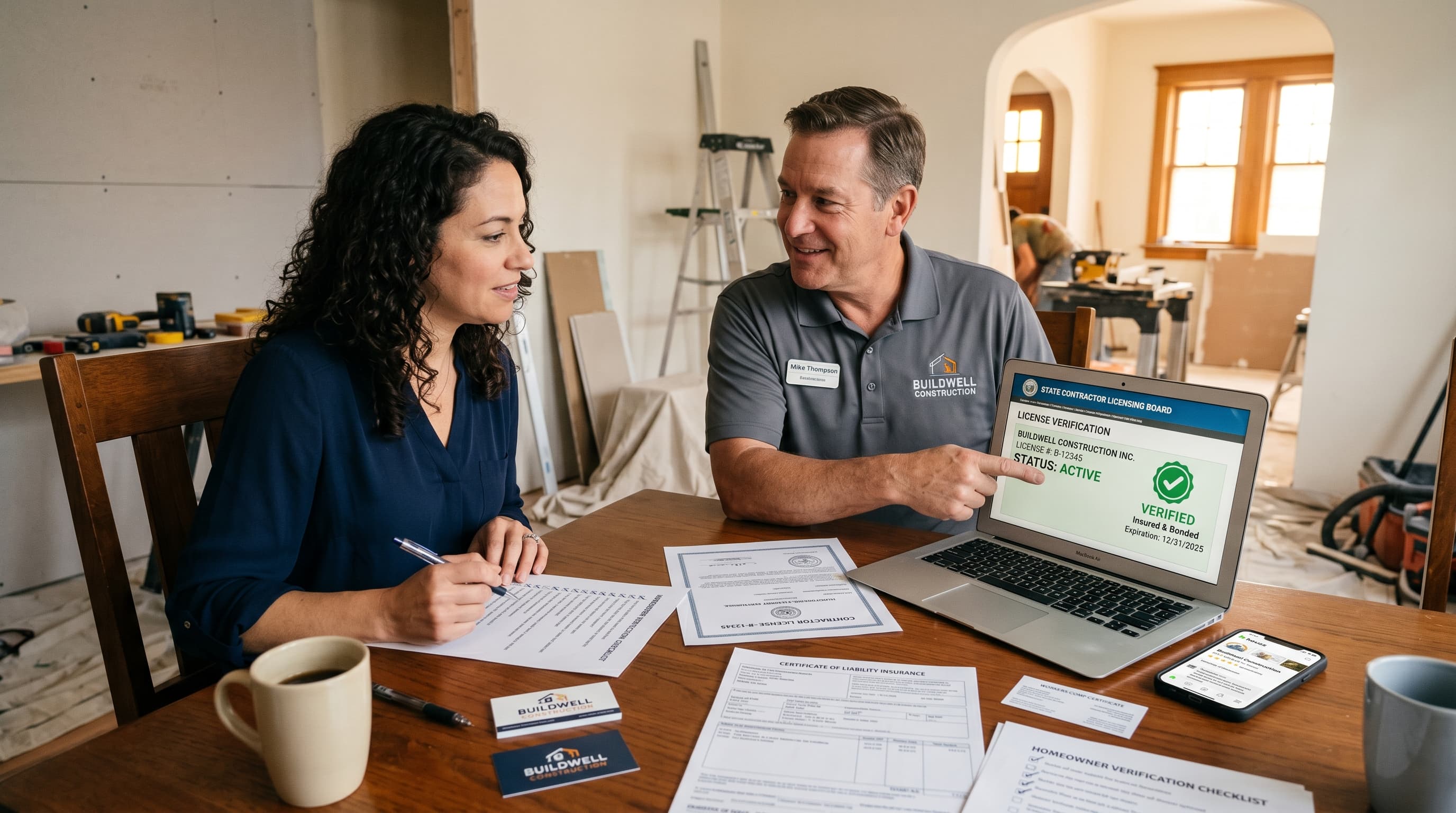
License and insurance. Your GC should hold a valid contractor's license in your state and carry both general liability insurance and workers' compensation. Ask for certificates - not just verbal confirmation.
Subcontractor vetting. Ask how they select their subs. Do they rely on the same trusted specialists job after job, or do they pull from whoever's available? GCs with long-standing subcontractor relationships tend to produce more consistent results.
Lien waivers. If a GC doesn't pay their subcontractors, those subs can file a mechanic's lien against your property - even if you paid the GC in full. These liens create a cloud on your home title, making it difficult to sell or refinance. Requiring signed lien waivers as work is completed protects you from that scenario.
Change order process. Change orders affect over 75% of construction projects, with the average project experiencing cost increases of 10-15%. A professional GC documents every change in writing, with a price attached, before proceeding. Be cautious of anyone who handles changes verbally.
How Homeplexi Simplifies This
Finding a trustworthy general contractor used to mean asking neighbors, scrolling review sites, and hoping for the best. Homeplexi changes that process.
the best. Homeplexi https://homeplexi.com/ changes that process.
You describe your project, and the AI sources licensed local contractors, gathers competitive quotes, and surfaces the best matches for your specific job. You can compare bids side by side, communicate with contractors directly through the platform, and track project progress without chasing anyone down.
All your project documents - contracts, permits, invoices, lien waivers - live in one place. And once the project wraps up, Homeplexi keeps working: maintenance reminders, appliance records, vendor scheduling, and utility tracking all stay organized under one membership.
That kind of structure makes the GC-subcontractor relationship work in your favor, because you're not starting from scratch every time you need someone reliable.
FAQs
What's the main difference between a general contractor and a subcontractor? A general contractor manages the entire project and holds the contract with you. A subcontractor is a trade specialist hired by the GC to complete a specific portion of the work. You typically have no direct contract with subcontractors.
Do I need a general contractor for every home project? No. Single-trade jobs - like hiring an electrician or a plumber for a focused repair - often don't require a GC. You need one when a project involves multiple trades, permits, or significant coordination across phases.
Can a subcontractor put a lien on my home? Yes. If a general contractor fails to pay a subcontractor, that sub may have the legal right to file a mechanic's lien against your property. Requiring signed lien waivers as work progresses is the standard way to protect yourself.
How does a general contractor price their work? A GC typically marks up subcontractor bids to cover coordination, risk management, and project oversight. This markup is a normal part of construction pricing and reflects the value of having one accountable party managing the entire job.
Should I hire subcontractors directly to save money? On single-trade jobs, it can make sense. On multi-trade projects, acting as your own GC means taking on scheduling, sequencing, and dispute resolution yourself - and the time and risk involved often outweigh the savings.
How do I verify that a general contractor is properly licensed? Ask for their license number and check it through your state's contractor licensing board. Also request current certificates of insurance for general liability and workers' compensation before any work begins.
What happens if a subcontractor does poor work on my project? Your recourse is with the general contractor, not the subcontractor directly. Your contract is with the GC, and they're responsible for the quality of every trade on your job site. Document the issue in writing and request a resolution through your GC.
Knowing who does what on your project isn't just useful background - it directly shapes how you hire, what you verify, and how you protect yourself financially. Choose your GC carefully, understand the sub relationship, and make sure every agreement is in writing before work starts.
Need Professional Help?
Homeplexi connects you with vetted contractors, helps you compare quotes, and manages your entire home improvement project in one place.
Get Started Free →Marcus Chen is a licensed general contractor in California with 18+ years of experience managing residential remodels and new construction projects. He holds a California Contractors State License Board credential and has completed over 500 successful projects.
Important Safety Disclaimer
Please read this carefully before following any advice:
- Always prioritize safety: Wear appropriate protective equipment (safety glasses, gloves, etc.) when performing any home maintenance or repair work.
- Know your limits: If you're not confident in your ability to safely complete a task, hire a licensed professional. This is especially important for electrical, gas, plumbing, and structural work.
- Verify all information: The guidance provided here is based on community discussions and general knowledge. Always double-check any advice with multiple reliable sources or a licensed professional.
- Follow local codes: Building codes, electrical codes, and plumbing codes vary by location. Ensure any work complies with your local regulations and obtain necessary permits.
- Turn off power/water/gas: Before working on electrical, plumbing, or gas systems, always shut off the relevant utilities at the source.
- For emergencies: If you have a gas leak, electrical fire, major water leak, or other emergency, evacuate immediately and call emergency services (911) and your utility company.
Liability: Homeplexi provides information for educational purposes only. We are not responsible for any injury, property damage, or losses resulting from following any guidance or advice provided through this platform. Use all information at your own risk.
When in doubt, always consult a licensed, insured professional contractor. Homeplexi can help you find qualified professionals in your area.
Found this helpful? Share with others:
Related Articles
Thumbtack vs HomeAdvisor: What
Most homeowners try at least one of these platforms before forming strong opinions about both. You post a job,...
Angi vs HomeAdvisor: Are They Different
If you've searched for a contractor recently, you've probably landed on both Angi and HomeAdvisor. They...
Angi Alternatives for Homeowners Who Want More Than a Lead-Gen List
- <u>FAQs</u> You post a request on Angi, your phone buzzes with three contractors calling within minutes, and then two of them ghost you after the first message. The third shows up, quotes a number t...