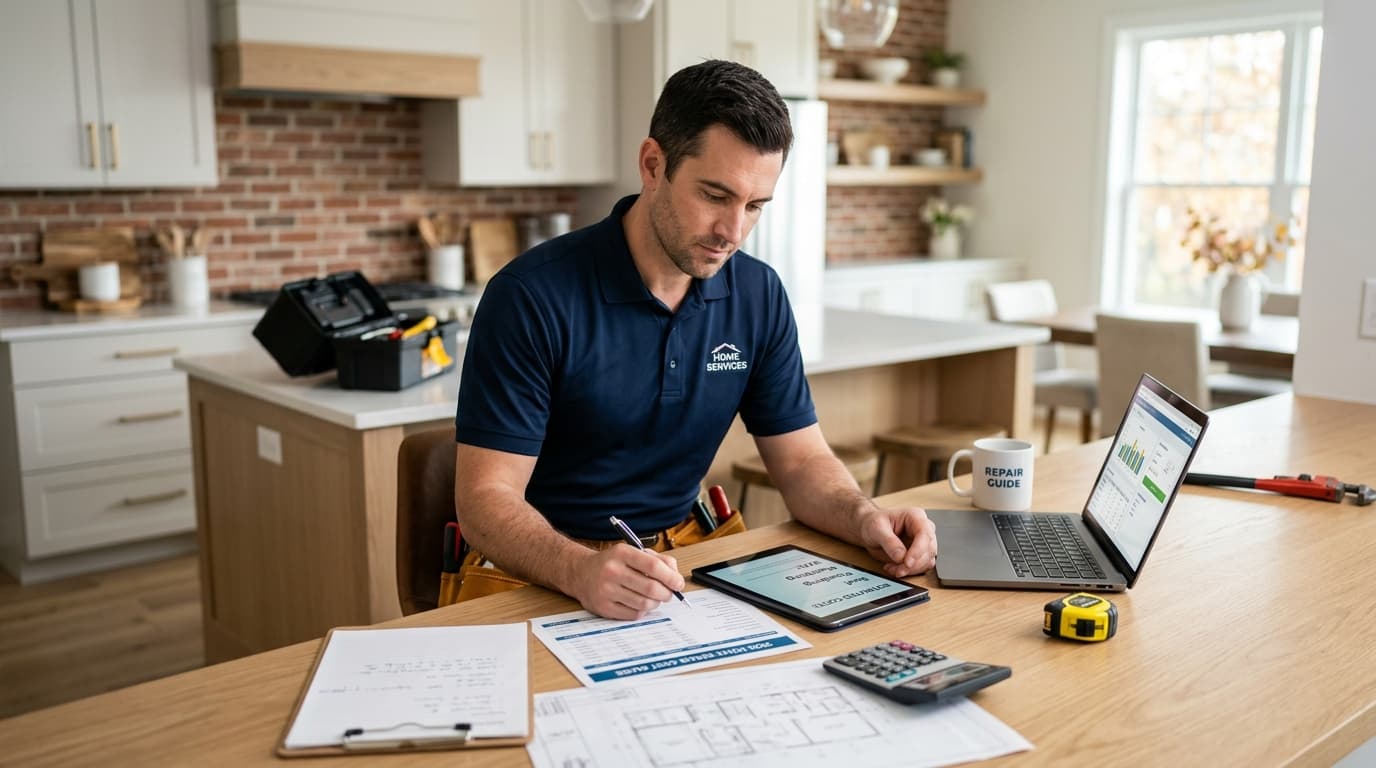
Picture this: Your kitchen faucet starts dripping at 2 AM. By morning, it's turned into a steady stream. No amount of tightening can fix it. You call three contractors for quotes and get wildly different estimates. One says $150. Another quotes $800. The third insists you need to replace your entire plumbing system for $3,500.
Sound familiar? You're not alone. Nearly 70% of homeowners report feeling overwhelmed when evaluating contractor quotes. They wonder if they're being quoted fairly or taken for a ride. Understanding realistic home repair costs protects you from overcharging while ensuring quality work that lasts.
Why Home Repair Pricing Feels Like a Mystery
The home repair industry has a transparency problem. Unlike buying a car where you can research standard prices, home repairs vary dramatically. Several factors create this confusion:
Regional labor costs make the biggest difference. A plumber in San Francisco charges $150-250 per hour. The same plumber in rural Ohio charges $45-80 per hour. That's a 3x difference for identical work.
Material quality and availability affect pricing too. Standard copper pipes cost $2-4 per foot. Premium PEX piping runs $0.50-2 per foot. Supply chain issues in 2026 have increased material costs by 15-20% over 2025 levels.
Complexity of your specific situation changes everything. Replacing a toilet in a standard bathroom costs $200-400. But if your floor has water damage, add $500-1,500. If pipes need rerouting, add another $300-800.
Contractor overhead and business model impact quotes significantly. Solo contractors have 20-30% lower overhead than large companies. But larger companies often provide better warranties and insurance coverage.
Seasonal demand fluctuations create price swings. HVAC repairs cost 20-40% more in summer. Roofing work costs 15-25% less in late fall.
Another 15% choose the cheapest option and face quality issues within 12 months.
Breaking Down 2026 Home Repair Costs by Category
Let's examine realistic price ranges for common home repairs. We'll include guidance on DIY versus professional work.
Plumbing Repairs
Leaky Faucet:
- DIY Cost: $15-50 for replacement parts
- Professional Cost: $150-300
- Time to complete: DIY 1-2 hours, Pro 30-45 minutes
- When to DIY: Simple cartridge or washer replacement in accessible locations
- When to hire a pro: Pipe damage, wall access needed, or vintage fixtures
Common faucet repairs include replacing O-rings ($2-5), cartridges ($15-30), or valve seats ($10-20). Professional plumbers charge $75-150 for labor plus parts. Emergency calls add $100-200 to the base rate.
Toilet Repair:
- DIY Cost: $20-75 for parts
- Professional Cost: $200-400
- Common issues: Running toilet ($20-40), weak flush ($30-50), minor leaks ($25-45)
- When to DIY: Flapper replacement, chain adjustment, fill valve issues
- When to hire a pro: Floor damage, major leaks, complete replacement
Toilet repairs rank among the most common DIY projects. A new flapper costs $5-15. A fill valve runs $15-30. Complete toilet replacement costs $150-500 for the unit plus $150-250 for installation.
Garbage Disposal Issues:
- DIY Cost: $100-200 for new unit
- Professional Cost: $300-600 installed
- Basic repairs: Reset button ($0), unjamming ($0-20), blade sharpening ($0)
- When to DIY: Simple jams, reset procedures
- When to hire a pro: Electrical connections, mounting problems, leaks
Another 25% require simple unjamming. Only 15% need replacement.
Water Heater Problems:
- DIY Cost: $20-150 for minor parts
- Professional Cost: $300-800 for repairs, $1,500-3,500 for replacement
- Common fixes: Pilot light ($0-50), thermostat ($150-250), heating element ($200-350)
- When to hire a pro: Always for gas units, electrical connections, or tank replacement
Water heaters typically last 8-12 years. Annual flushing ($0 DIY, $100-150 professional) extends lifespan by 2-3 years.
Pipe Repairs:
- Professional Cost: $150-350 per hour plus materials
- Copper pipe: $2-4 per foot
- PEX pipe: $0.50-2 per foot
- PVC pipe: $0.50-1.50 per foot
- Emergency rates: Add 50-100% for nights/weekends
Electrical Work
Outlet/Switch Replacement:
- DIY Cost: $5-25 per outlet/switch
- Professional Cost: $150-250 per outlet
- GFCI outlets: $20-30 DIY, $200-300 professional
- USB outlets: $25-40 DIY, $175-275 professional
- When to DIY: Like-for-like replacement with power off
- When to hire a pro: New circuits, GFCI installation, any rewiring
Electrical work requires permits for most changes beyond simple replacement. Light Fixture Installation:
- DIY Cost: $50-300 for fixture
- Professional Cost: $200-500 plus fixture
- Ceiling fans: $300-600 professional installation
- Chandeliers: $400-800 for heavy fixtures
- When to DIY: Direct replacement with matching wiring
- When to hire a pro: New boxes, ceiling fans, heavy fixtures
Circuit Breaker Issues:
- Professional Cost: $150-300 for single breaker replacement
- Panel upgrade: $2,000-4,500 for 200-amp service
- GFCI breaker: $200-350 installed
- When to hire a pro: Always—panel work is dangerous
Whole-House Electrical:
- Inspection: $200-500
- Rewiring: $8,000-15,000 for 2,000 sq ft home
- Generator installation: $3,000-6,000 for automatic standby
HVAC Repairs
Filter Replacement:
- DIY Cost: $15-30 every 1-3 months
- 1" filters: $5-15 each
- 4" filters: $20-40 each
- HEPA filters: $30-60 each
- When to DIY: Always—basic maintenance
- Professional Cost: $100-150 if during service call
Regular filter changes improve efficiency by 5-15%. They reduce repair costs by $200-500 annually.
Thermostat Issues:
- DIY Cost: $50-200 for programmable unit
- Professional Cost: $250-450 installed
- Smart thermostats: $200-350 DIY, $400-600 professional
- Common fixes: Battery replacement ($5), recalibration ($0-50)
- When to DIY: Battery replacement, basic programming
- When to hire a pro: Wiring issues, smart installation, zoning systems
AC Repairs:
- Service call: $100-200 diagnostic fee
- Refrigerant recharge: $200-600
- Capacitor replacement: $150-400
- Fan motor: $400-700
- Compressor: $1,500-2,500
- Complete replacement: $3,500-7,500
Furnace Repairs:
- Ignitor replacement: $150-300
- Blower motor: $450-800
- Heat exchanger: $1,000-3,000
- Complete replacement: $3,000-6,000
Duct Cleaning:
- Professional Cost: $300-500 for average home
- Additional vents: $25-35 each
- Sanitizing treatment: $50-100
- When to hire a pro: Always—requires specialized equipment
Annual tune-ups ($150-250) prevent 75% of emergency breakdowns.
Exterior Repairs
Gutter Cleaning:
- DIY Cost: $0-50 for tools/supplies
- Professional Cost: $150-300
- Per linear foot: $1-2.50
- Gutter guards installation: $8-12 per foot
- When to DIY: Single-story with safe ladder access
- When to hire a pro: Multi-story, repairs needed, or safety concerns
Clogged gutters cause $1,000-10,000 in water damage. Cleaning twice yearly prevents 90% of gutter-related problems.
Pressure Washing:
- DIY Cost: $200-400 purchase, $40-80 rental
- Professional Cost: $300-600 for whole house
- Driveway only: $100-200
- Deck/patio: $150-300
- When to DIY: Time available, proper equipment
- When to hire a pro: Delicate surfaces, high areas, large properties
Minor Roof Repairs:
- DIY Cost: $50-200 for materials
- Professional Cost: $300-1,000
- Full roof replacement: $8,000-15,000 (see our complete roof replacement cost guide)
- Shingle replacement: $100-300 per square (100 sq ft)
- Flashing repair: $200-500
- When to DIY: Never—insurance and safety issues
- When to hire a pro: Always for roof work
Window Repairs:
- Seal replacement: $150-300 per window
- Glass replacement: $300-700 per pane
- Complete window: $450-850 installed
- Screen repair: $25-50 DIY, $75-150 professional
Siding Repairs:
- Vinyl patching: $200-400 per section
- Wood siding: $300-600 per section
- Complete residing: $8,000-15,000 for average home
Interior Repairs
Drywall Repairs:
- Small holes: $50-150 professional
- Large patches: $200-400
- Water damage: $400-800 per area
- DIY supplies: $20-50 for patch kit
Painting:
- DIY Cost: $200-400 per room
- Professional Cost: $400-800 per room
- Whole house interior: $3,000-6,000
- Exterior painting: $3,500-7,000
Flooring Repairs:
- Hardwood refinishing: $3-5 per sq ft
- Carpet replacement: $3-7 per sq ft installed
- Tile repair: $150-300 per area
- LVP installation: $4-8 per sq ft
Kitchen Remodels:
- Minor remodel: $15,000-30,000
- Major remodel: $40,000-75,000+
- See our detailed kitchen remodel cost breakdown for where every dollar goes
Door Repairs:
- Adjustment/alignment: $75-150
- Lock replacement: $150-300
- Door replacement: $300-600 for interior, $800-1,500 for exterior
Red Flags: When Quotes Don't Add Up
Watch for these warning signs in contractor quotes:
Pricing red flags:
- Quotes 50% higher or lower than others without explanation
- No breakdown between labor and materials
- Unusually high "diagnostic fees" not applied to repairs
- Hidden fees appearing after work starts
- Prices changing between estimate and contract
Behavioral red flags:
- Pressure to sign immediately
- "Today only" pricing tactics
- Door-to-door solicitation after storms
- Requests for 50%+ upfront payment
- No written estimate provided
- Unwillingness to provide references
Documentation red flags:
- No license or insurance information
- Vague work descriptions
- Missing warranty details
- No completion timeline
- Unclear payment terms
Smart Strategies for Managing Home Repair Costs
Get Multiple Quotes (But Do It Right)
Request 3 quotes for jobs over $500. Provide identical information to each contractor. Include:
- Specific problem description
- Photos when possible
- Preferred timeline
- Budget range if applicable
Ask for itemized estimates showing:
- Labor hours and rates
- Material costs with brands/models
- Permit fees if required
- Warranty terms
- Payment schedule
Check references before requesting quotes. Homeplexi's verified reviews help identify reliable contractors before you waste time on quotes.
Time Your Repairs Strategically
Best times for specific repairs:
- HVAC work: Spring or fall (20-30% savings)
- Roofing: Late fall (15-25% discount)
- Exterior painting: Early fall
- Interior work: Winter months
- Plumbing: Avoid holidays and weekends
Bundle projects for savings:
- Multiple electrical outlets: Save $50-100 per additional outlet
- Bathroom fixtures: Save 15-20% on multiple replacements
- HVAC maintenance: Annual contracts save $100-300
Know When to Negotiate
Negotiable items:
- Material upgrades at contractor cost
- Cash payment discounts (3-5%)
- Off-season scheduling (10-20% savings)
- Multiple project bundles
- Extended warranties
Non-negotiable items:
- Permit fees
- Minimum service charges
- Emergency rates
- Insurance requirements
- Code compliance work
Build a Repair Fund
Financial experts recommend saving 1-3% of home value annually. For different home values:
- $200,000 home: $2,000-6,000 yearly ($167-500 monthly)
- $300,000 home: $3,000-9,000 yearly ($250-750 monthly)
- $500,000 home: $5,000-15,000 yearly ($417-1,250 monthly)
Prioritize savings for:
- Roof replacement: $8,000-15,000 every 20-30 years
- HVAC replacement: $6,000-12,000 every 15-20 years
- Water heater: $1,500-3,500 every 10-12 years
- Appliances: $500-2,000 each every 10-15 years
Making the Right Call: DIY vs. Professional
Good DIY projects:
- Painting and touch-ups
- Basic caulking and weatherstripping
- Filter replacements
- Toilet flapper repairs
- Faucet aerator cleaning
- Light switch/outlet covers
- Basic landscaping
Always hire professionals for:
- Electrical panel work
- Gas line connections
- Major plumbing (mains, sewers)
- Roof repairs
- Structural modifications
- HVAC refrigerant work
- Asbestos or mold removal
Consider your true costs: DIY savings calculations should include:
- Your hourly wage value
- Tool purchases or rentals
- Multiple trips for supplies
- Potential mistake corrections
- Lost warranty coverage
5x the original professional quote on average.
Regional Cost Variations
Home repair costs vary significantly by location. Major metropolitan areas see these premiums:
- San Francisco: 45-60% above national average
- New York: 40-55% above average
- Los Angeles: 35-45% above average
- Chicago: 15-25% above average
- Dallas: 5-15% above average
- Phoenix: National average
- Atlanta: 5-10% below average
Rural areas typically see 20-40% lower costs but may have:
- Fewer contractor options
- Longer wait times
- Travel charges for specialists
- Limited material availability
Seasonal Maintenance Prevents Costly Repairs
Spring tasks (prevent $500-2,000 in repairs):
- Clean gutters and downspouts
- Check roof for winter damage
- Service AC before summer
- Inspect and clean dryer vents
- Test sump pump operation
Summer tasks (prevent $300-1,500 in repairs):
- Check and clean window seals
- Inspect deck/patio for repairs
- Trim vegetation from house
- Clean refrigerator coils
- Check attic ventilation
Fall tasks (prevent $1,000-5,000 in repairs):
- Winterize outdoor faucets
- Clean gutters again
- Service heating system
- Seal gaps and cracks
- Check insulation levels
Winter tasks (prevent $200-1,000 in repairs):
- Monitor for ice dams
- Check for drafts
- Run water in unused fixtures
- Inspect basement for moisture
- Change HVAC filters monthly
The Bottom Line
Understanding realistic home repair costs empowers informed decisions. The cheapest quote isn't always the best value. Consider experience, warranties, and material quality when choosing contractors.
Key takeaways for managing home repair costs:
- Get 3 quotes for major work
- Watch for red flags in estimates
- Time repairs strategically
- Maintain regularly to prevent major issues
- Know your DIY limits
- Build a proper repair fund
Remember that quality work costs more upfront but saves money long-term. Homeplexi's platform helps homeowners find reliable contractors, compare accurate quotes, and track project progress. Our data from 50,000+ projects ensures you pay fair prices for quality work.
Related Articles:
- Drywall Repair: 5 Mistakes
- HVAC Troubleshooting Stories
- How to Get Multiple Contractor Quotes
- Questions to Ask Before Hiring
- 12 Critical Contractor Red Flags
Need help finding a reliable contractor? Homeplexi connects you with vetted professionals, helps you compare quotes, and manages your entire home improvement project in one place. Get started free →
FAQ
What are the most common home repairs homeowners need to budget for? Most frequent repairs with typical costs: (1) Plumbing (leaky faucets $150-$350, water heater $1,200-$3,500, pipe repairs $200-$1,000), (2) HVAC ($150-$450 for service, $3,000-$8,000 for replacement), (3) Roof ($300-$1,500 for repairs, $8,000-$15,000 for replacement), (4) Electrical ($150-$500 for outlet/switch repairs, $1,500-$3,000 for panel upgrades), (5) Appliances ($150-$600 for repairs, $400-$2,000 for replacement), (6) Drywall ($100-$400 for patches, $1-$3 per sq ft for larger areas), and (7) Foundation ($500-$2,500 for minor fixes, $4,000-$15,000 for major repairs). Budget 1-2% of home value annually to cover these inevitable expenses.
How much does it cost to fix a leaky roof? Minor leak repairs cost $300-$1,500 depending on accessibility and cause. Localized shingle replacement runs $150-$600. Flashing repairs around chimneys or vents cost $200-$800. Multiple leaks or widespread damage may require roof replacement: $5,000-$12,000 for asphalt shingles on average 2,000 sq ft homes, or $12-$20 per square foot installed. Don't delay roof leaks—$500 repairs become $5,000+ water damage to ceilings, insulation, and structural wood if ignored. Steep roofs or two-story homes add 20-40% to repair costs due to safety equipment and access difficulty.
What does HVAC repair or replacement cost? HVAC repairs average $150-$450 for minor issues (thermostat, capacitor, refrigerant recharge). Major component failures cost $500-$1,500 (compressor, blower motor, heat exchanger). Full system replacement runs $3,000-$8,000 for mid-range furnace/AC combo, or $9,000-$16,500 for high-efficiency systems in larger homes. Replace rather than repair if: system is 15+ years old, repair costs exceed 50% of replacement cost, or you're experiencing frequent breakdowns. HVAC replacements during emergency peak seasons (summer heatwaves, winter cold snaps) cost 15-25% more than planned off-season replacements.
How much should I expect to pay for electrical work? Simple electrical repairs: $150-$300 to replace outlets or switches, $100-$250 for new GFCI outlets, $200-$500 for ceiling fan installation. Major electrical work: $1,500-$3,000 for panel upgrades (100 to 200 amp), $1,000-$2,500 for rewiring single rooms, $8,000-$15,000 for whole-house rewiring. Electrician rates run $50-$100 per hour, with 1-2 hour minimum service calls. Emergency after-hours service costs 1.5-2x standard rates. Never DIY electrical beyond replacing outlets—improper work creates fire hazards and voids insurance if it causes damage.
What plumbing repairs are most expensive? Most costly plumbing repairs: (1) Sewer line replacement ($3,000-$10,000 for traditional dig, $4,000-$15,000 for trenchless), (2) Main water line replacement ($1,500-$5,000), (3) Repiping house ($4,000-$12,000), (4) Foundation slab leaks ($2,000-$4,000), (5) Water heater replacement ($1,200-$3,500), (6) Septic system repair/replacement ($3,000-$10,000), and (7) Bathroom remodels with plumbing relocation ($8,000-$25,000). Small plumbing leaks ignored often become these expensive repairs—$200 leaky pipe repairs turn into $4,000 foundation damage if water seeps undetected.
How often do home appliances need replacing? Average appliance lifespans: Refrigerator (13-17 years), Dishwasher (9-12 years), Washing machine (10-14 years), Dryer (10-13 years), Oven/Range (13-17 years), Microwave (9-10 years), Garbage disposal (10-12 years), and Water heater (10-15 years). Replace rather than repair if: appliance is past 75% of expected lifespan, repair costs exceed 50% of replacement cost, or energy efficiency improvements will pay for themselves in 3-5 years. Budget for 1-2 major appliance replacements every 5 years in average homes.
What emergency home repairs should I prioritize? Immediate priority repairs that prevent catastrophic damage: (1) Active water leaks (roof, plumbing, foundation), (2) Broken HVAC in extreme weather (health risk), (3) Electrical hazards (sparking outlets, burning smells, frequent breaker trips), (4) Gas leaks or carbon monoxide alarms, (5) Sewage backups, (6) Broken water heaters flooding basements, and (7) Major storm damage exposing home to weather. These repairs prevent bigger problems—$1,000 emergency leak repairs prevent $10,000+ mold and structural damage. Keep 3-6 months housing expenses in emergency fund specifically for these situations.
How can I reduce home repair costs? Cost reduction strategies: (1) Regular maintenance prevents expensive failures (HVAC servicing $150 prevents $3,000 compressor failure), (2) Get 3-4 quotes for repairs over $1,000, (3) DIY appropriate tasks (painting, basic fixtures, landscaping), (4) Buy quality appliances initially (cheap appliances fail faster, costing more long-term), (5) Fix small problems immediately before they grow ($50 caulk job prevents $2,000 water damage), (6) Use home warranties strategically if seller-paid, (7) Build relationships with reliable contractors who offer fair pricing to repeat customers, and (8) Schedule non-emergency repairs during contractor slow seasons (fall/spring) for 10-20% discounts.
Need Professional Help?
Homeplexi connects you with vetted contractors, helps you compare quotes, and manages your entire home improvement project in one place.
Get Started Free →Rachel Kim is a market analyst specializing in the home services industry. She has published pricing studies and platform comparisons for Consumer Reports, BeltStack, and industry trade publications.
Important Safety Disclaimer
Please read this carefully before following any advice:
- Always prioritize safety: Wear appropriate protective equipment (safety glasses, gloves, etc.) when performing any home maintenance or repair work.
- Know your limits: If you're not confident in your ability to safely complete a task, hire a licensed professional. This is especially important for electrical, gas, plumbing, and structural work.
- Verify all information: The guidance provided here is based on community discussions and general knowledge. Always double-check any advice with multiple reliable sources or a licensed professional.
- Follow local codes: Building codes, electrical codes, and plumbing codes vary by location. Ensure any work complies with your local regulations and obtain necessary permits.
- Turn off power/water/gas: Before working on electrical, plumbing, or gas systems, always shut off the relevant utilities at the source.
- For emergencies: If you have a gas leak, electrical fire, major water leak, or other emergency, evacuate immediately and call emergency services (911) and your utility company.
Liability: Homeplexi provides information for educational purposes only. We are not responsible for any injury, property damage, or losses resulting from following any guidance or advice provided through this platform. Use all information at your own risk.
When in doubt, always consult a licensed, insured professional contractor. Homeplexi can help you find qualified professionals in your area.
Found this helpful? Share with others:
Related Articles
HVAC Not Cooling? 5 Things to Check Before Calling a Pro
AC not working in summer heat
5 Plumbing Problems Homeowners Fixed (And 3 They Shouldn't Have)
You've got a plumbing issue and no idea if it's a $10 fix or a $1,000 disaster. Here's what real homeowners learned trying to fix it themselves—and when they should've called a pro.
Why Your Toilet Keeps Running (And How to Fix It)
Wasting water and high water bills