How Much Does a Contractor Charge? A Real Breakdown by Project Type
- How Contractors Price Their Work
- General Contractor Rates
- Costs by Project Type
- Plumbing
- Electrical
- HVAC
- Roofing
- Kitchen Remodel
- Bathroom Remodel
- Painting (Interior)
- Landscaping and Hardscaping
- What Drives Costs Up
- Why Getting Multiple Quotes Matters
- Red Flags in Contractor Quotes
- Tracking What You Spend
- FAQs Getting a contractor quote can feel like asking how long a piece of string is. The number you hear depends on where you live, what trade you need, how complex the job is, and whether you caught someone on a slow week or a fully booked one. That uncertainty is exactly why homeowners end up overpaying-or hiring the wrong person. This breakdown covers what contractors actually charge across the most common project types in 2026, how pricing structures work, and what pushes costs up or down-so you can walk into any quote conversation with realistic expectations.
How Contractors Price Their Work
Before getting into specific numbers, it helps to understand the three main pricing models. Hourly rate. Common for smaller jobs, repairs, and handyman work. You pay for time and materials separately. Rates typically range from $50 to $150 per hour depending on the trade and your market.
Generated by AI CMO by Okara
Fixed bid (lump sum). The contractor scopes the project, estimates labor and materials, adds overhead and profit margin, and gives you one number. Most remodeling and specialty trade work is priced this way. Cost-plus. You pay actual material and labor costs plus a percentage markup, usually 10 to 25 percent. More transparent, but it shifts the risk of cost overruns onto you. Most residential general contractors use a markup of 20% to 33% on total project costs, which covers overhead and a target net profit of 8% to 10%. That is not padding-it covers business overhead, insurance, licensing fees, and the time spent estimating jobs they do not win.
General Contractor Rates
A general contractor (GC) manages the full scope of a project, coordinates subcontractors, and takes responsibility for the outcome. They do not typically do the hands-on work themselves. GC fees are usually charged as a percentage of total project cost - typically 15-40% depending on project type, region, and service level. On a $50,000 kitchen remodel, that means $5,000 to $10,000 goes to the GC before any trade labor or materials are factored in. For smaller projects where a GC charges hourly, expect $70 to $130 per hour in most metro markets.
Costs by Project Type
Plumbing
Plumbers charge $75 to $150 per hour for most residential work. Simple repairs like fixing a running toilet or swapping out a faucet typically run $150 to $350 total. More involved work scales quickly:
- Water heater replacement: $800 to $1,800 (unit plus labor)
- Pipe repair or rerouting: $300 to $1,500 depending on access
- Full bathroom rough-in: $2,500 to $6,000 Emergency or after-hours calls usually carry a surcharge of $50 to $150 on top of the standard rate.
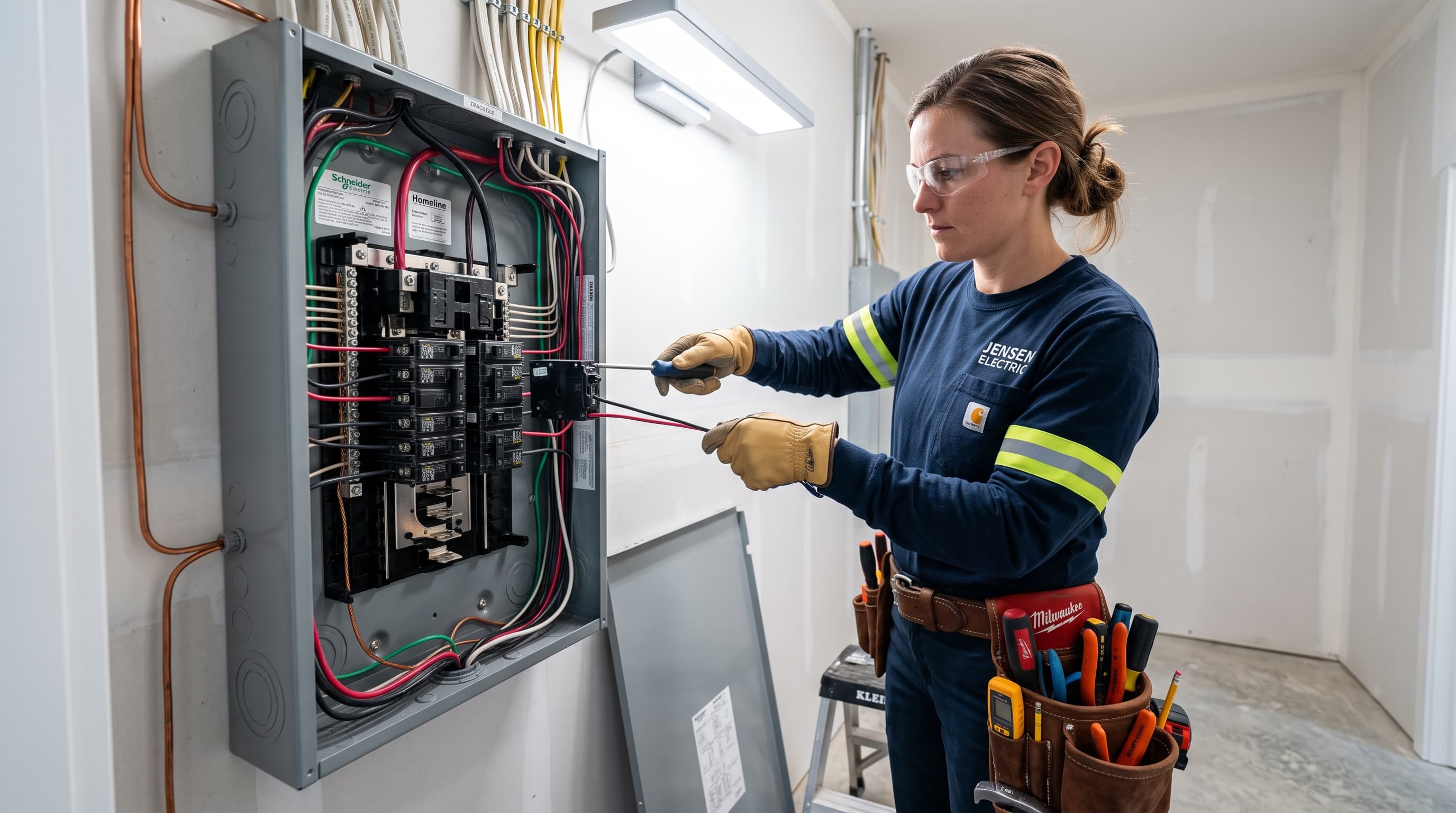
Electrical
Licensed electricians typically charge $80 to $150 per hour. Panel upgrades, rewiring, and EV charger installations are almost always quoted as fixed bids because the scope is predictable.
-
Outlet or switch replacement: $100 to $250
-
Circuit breaker panel upgrade (100A to 200A): $1,500 to $3,500
-
EV charger installation: $800 to $2,000
-
Whole-home rewiring: $8,000 to $20,000+ Permits are often required for electrical work and add $100 to $500 to the total, depending on your municipality.
HVAC
HVAC contractors typically quote fixed bids for equipment replacement and hourly for service calls and repairs.
- Service call and diagnostic: $75 to $200
- AC refrigerant recharge: $200 to $600
- Furnace repair: $300 to $1,200
- Central AC unit replacement (3-ton): $3,500 to $7,500 installed
- Heat pump system installation: $5,000 to $12,000 Seasonal demand affects HVAC pricing more than almost any other trade. Calling in July for AC repair or January for a furnace issue will cost more than scheduling during shoulder months.
Roofing
Roofing is almost always quoted per square (100 square feet). Asphalt shingle replacement-the most common residential roofing job-runs $4 to $8 per square foot installed, or roughly $8,000 to $20,000 for a typical 2,000 square foot roof.
- Roof inspection: $150 to $400
- Minor repair (flashing, a few shingles): $300 to $1,500
- Full asphalt shingle replacement: $8,000 to $20,000
- Metal roofing: $15,000 to $40,000+ Pitch, accessibility, and the number of layers being torn off all affect the final number. A steep roof with two layers of old shingles costs significantly more than a flat, single-layer job.
Kitchen Remodel
Kitchen remodels span an enormous range because scope varies so widely. A cosmetic refresh-new hardware, paint, countertops-costs far less than a full gut renovation with layout changes.
- Minor refresh (cosmetic only): $5,000 to $15,000
- Mid-range remodel (new cabinets, countertops, appliances): $25,000 to $60,000
- High-end or full gut remodel: $75,000 to $150,000+ Labor typically accounts for 30 to 35 percent of total kitchen remodel cost. The rest goes to materials, appliances, and GC markup.
Bathroom Remodel
- Basic refresh (fixtures, tile, vanity): $5,000 to $15,000
- Full remodel with layout changes: $15,000 to $40,000
- Master bath addition or expansion: $30,000 to $80,000+ Tile work is labor-intensive and often the biggest single cost driver in a bathroom remodel. Custom patterns or large-format tiles add both time and expense.
Painting (Interior)
Painters charge by the square foot, by the room, or by the day depending on the job.
- Interior painting per room: $300 to $800 (average-sized room)
- Whole-home interior painting: $3,000 to $8,000
- Exterior painting: $1,500 to $6,000 depending on size and prep needed Prep work-patching, sanding, priming-drives a lot of the variation between painter quotes. A house with damaged drywall or peeling exterior paint will cost more than one in clean condition.
Landscaping and Hardscaping
- Lawn care (per visit): $50 to $200
- Tree removal: $500 to $2,500 per tree
- Patio installation (concrete or pavers): $3,000 to $15,000
- Retaining wall: $5,000 to $20,000+
- Full landscape design and installation: $10,000 to $50,000+
What Drives Costs Up
A few factors consistently push quotes higher, regardless of trade. Location. Labor rates in San Francisco, New York, or Seattle run 30 to 50 percent higher than in smaller metros or rural areas. Material costs vary by region too. Permit requirements. Structural, electrical, plumbing, and HVAC work almost always requires permits. Contractors who pull permits and schedule inspections charge for that time-but it protects you legally and at resale.
Scope creep. Jobs that seem simple often reveal hidden problems once work starts. Water damage behind a wall, outdated wiring that needs to be brought to code, a rotted subfloor under tile-these all add cost. Good contractors flag these possibilities upfront. Be wary of bids that seem to ignore obvious risk factors. Urgency. Emergency calls, weekend work, and tight timelines all carry premiums. If you can plan ahead, you will pay less. Materials. Materials are typically marked up 7.5% to 10%, though some contractors mark up as much as 20%. On larger jobs, it is worth asking whether you can supply certain materials yourself, though some contractors prefer to handle everything.
Why Getting Multiple Quotes Matters
The spread between the lowest and highest quote for the same job is often 30 to 50 percent. That gap is not always about quality. Sometimes a contractor is slow and wants the work. Sometimes one is already mobilized nearby. Sometimes the scope was simply interpreted differently. Getting at least three quotes on any job over $1,000 is the single most effective way to avoid overpaying. It also gives you a baseline for evaluating whether a low bid is suspiciously cheap or a high bid is genuinely justified. The problem is that gathering multiple quotes traditionally means hours of phone tag, inconsistent proposals, and no easy way to compare what is actually included in each one. That is the problem Homeplexi was built to solve. You describe your project, the AI sources licensed, reviewed, and rated local contractors, collects competitive quotes, and surfaces them side by side-so you can compare scope, price, and contractor history in one place. No chasing down callbacks.
Red Flags in Contractor Quotes
A few things in a quote should give you pause.
- No written contract or scope of work. A verbal agreement is not protection.
- Large upfront deposit required. Asking for 10 to 30 percent upfront is normal. Asking for 50 percent or more before any work starts is a warning sign.
- Unusually low bid with vague scope. A bid that is 40 percent below the others often means something is excluded that you are assuming is included.
- No license or insurance documentation. Always ask for proof before signing anything.
- Cash-only payment. Legitimate contractors accept checks or bank transfers and provide receipts.
Tracking What You Spend
Most homeowners have no organized record of what they have paid contractors, what work was done, or which warranties are still active. That makes it hard to budget for future maintenance, evaluate a contractor's quality over time, or provide documentation when selling. Keeping a running log of every project, invoice, and contractor contact in one place pays off. Homeplexi stores full project and repair history alongside your home catalog, so you always have a record of what was done, by whom, and for how much.
FAQs
How much does a contractor charge per hour on average? It depends on the trade. Handymen typically charge $50 to $100 per hour. Plumbers and electricians run $75 to $150 per hour. HVAC technicians charge $80 to $150 per hour. General contractors doing project management work usually charge a percentage of total project cost rather than an hourly rate. Is it normal for a contractor to ask for money upfront? Yes-a deposit of 10 to 30 percent before work begins is standard. It covers material costs and secures your spot on the schedule. Deposits above 50 percent before any work starts are uncommon and worth questioning. Why do contractor quotes vary so much for the same job? Contractors interpret scope differently, have different overhead structures, and price risk differently. Demand also plays a role-a busier contractor quotes higher than one looking to fill their schedule. Getting three or more quotes helps you understand the realistic range and spot outliers in either direction. Should I hire the cheapest contractor? Not automatically. A low bid can reflect genuine efficiency, but it can also mean excluded scope, unlicensed work, or inexperience. Compare what is included in each bid, not just the bottom-line number. A mid-range quote with a clear scope of work and documented references is often the better choice. How much should I budget for home repairs annually? A commonly cited rule is 1 to 2 percent of your home's value per year. On a $400,000 home, that is $4,000 to $8,000 annually. Older homes, homes in harsh climates, and homes with aging systems like HVAC or roofing may run higher.
What is the difference between a general contractor and a subcontractor? A general contractor manages the overall project and is your primary point of contact. Subcontractors are the trade specialists-plumbers, electricians, tile setters-who the GC brings in for specific work. When you hire a GC, their fee covers coordinating those trades. You can also hire subcontractors directly for single-trade jobs. How do I know if a contractor's quote is fair? The most reliable check is comparison. Get at least three quotes and ask each contractor for a written scope of work. If two quotes are clustered near each other and one is significantly lower or higher, ask why. A fair quote reflects realistic labor costs for your market, appropriate material pricing, and a reasonable margin.
Contractor pricing is not a mystery-it just requires context. Knowing the typical range for your project type, understanding what drives costs up, and getting multiple written quotes puts you in a much stronger position than most homeowners. Head to homeplexi.com to describe your project and get competitive bids from licensed local contractors without the usual back-and-forth.
Need Professional Help?
Homeplexi connects you with vetted contractors, helps you compare quotes, and manages your entire home improvement project in one place.
Get Started Free →Rachel Kim is a market analyst specializing in the home services industry. She has published pricing studies and platform comparisons for Consumer Reports, BeltStack, and industry trade publications.
Important Safety Disclaimer
Please read this carefully before following any advice:
- Always prioritize safety: Wear appropriate protective equipment (safety glasses, gloves, etc.) when performing any home maintenance or repair work.
- Know your limits: If you're not confident in your ability to safely complete a task, hire a licensed professional. This is especially important for electrical, gas, plumbing, and structural work.
- Verify all information: The guidance provided here is based on community discussions and general knowledge. Always double-check any advice with multiple reliable sources or a licensed professional.
- Follow local codes: Building codes, electrical codes, and plumbing codes vary by location. Ensure any work complies with your local regulations and obtain necessary permits.
- Turn off power/water/gas: Before working on electrical, plumbing, or gas systems, always shut off the relevant utilities at the source.
- For emergencies: If you have a gas leak, electrical fire, major water leak, or other emergency, evacuate immediately and call emergency services (911) and your utility company.
Liability: Homeplexi provides information for educational purposes only. We are not responsible for any injury, property damage, or losses resulting from following any guidance or advice provided through this platform. Use all information at your own risk.
When in doubt, always consult a licensed, insured professional contractor. Homeplexi can help you find qualified professionals in your area.
Found this helpful? Share with others: